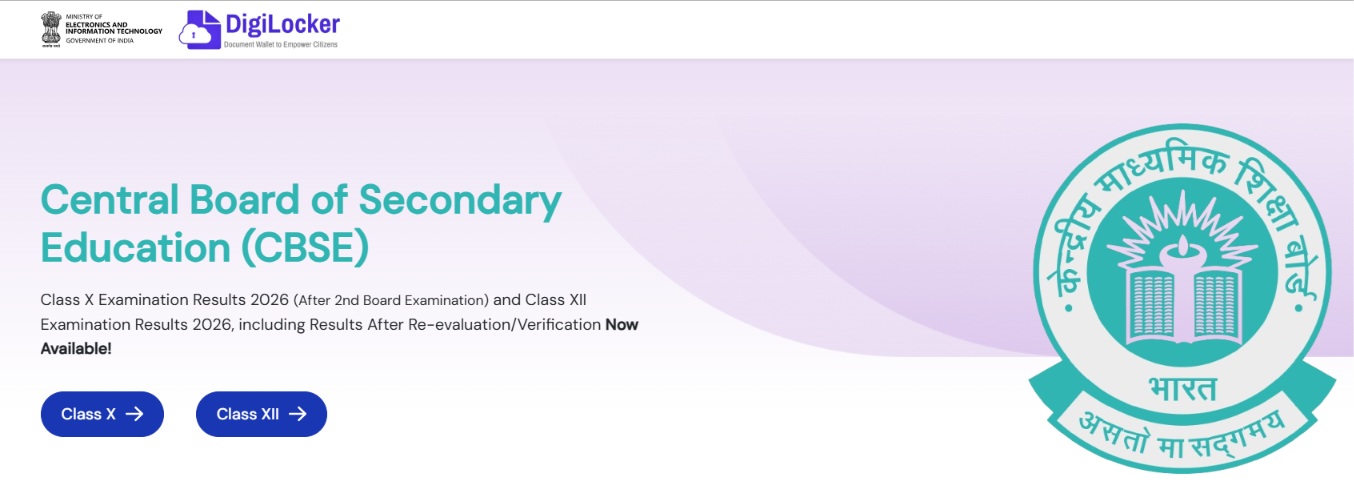
The Central Board of Secondary Education (CBSE) on Sunday declared the Class 10 Second Board Examination Results 2026, marking the successful implementation of the first year of the two-board examination system introduced under the National Education Policy (NEP) 2020.
According to CBSE, the overall pass percentage has increased to 96.78% after the declaration of the second board results. The optional examination provided students with another opportunity to improve their scores, with nearly 60% of candidates securing higher marks in one or more subjects. Approximately three lakh students improved their overall academic performance through the second attempt.
The second board examination was introduced to reduce examination pressure and offer students greater flexibility in their academic journey. Under the revised policy, students can appear for a second examination in eligible subjects, and CBSE considers the higher score from the two attempts while preparing the final marksheet.
How to Check CBSE Class 10 Second Board Result 2026
Students can access their results by following these simple steps:
- Visit the official CBSE Results website: https://results.cbse.nic.in
- Click on the link "CBSE Class X Second Board Examination Result 2026."
- Enter your Roll Number, School Number, Admit Card ID, and Date of Birth in the required fields.
- Click on the Submit button.
- Your CBSE Class 10 Second Board Result 2026 will appear on the screen.
- Verify all the details mentioned on the marksheet, including your name, subject-wise marks, grades, and qualifying status.
- Download and save the provisional marksheet for future reference.
You can also access your digital marksheet through the DigiLocker app or website using your registered mobile number and Aadhaar-linked credentials (if applicable).
Note: The online result is provisional. Students should collect their original marksheet and passing certificate from their respective schools when notified by CBSE. The board has retained the minimum passing requirement of 33% in each subject and has continued its policy of not publishing a merit list to promote healthy academic competition.
Education experts have welcomed the encouraging outcome of the new assessment system, stating that it provides students with a fair chance to improve their performance while reducing the stress associated with a single high-stakes examination.
The successful rollout of the second board examination is being viewed as a significant step towards creating a more student-friendly and flexible education system. As schools and students adapt to the new format, the initiative is expected to play an important role in shaping future board examinations across the country.
