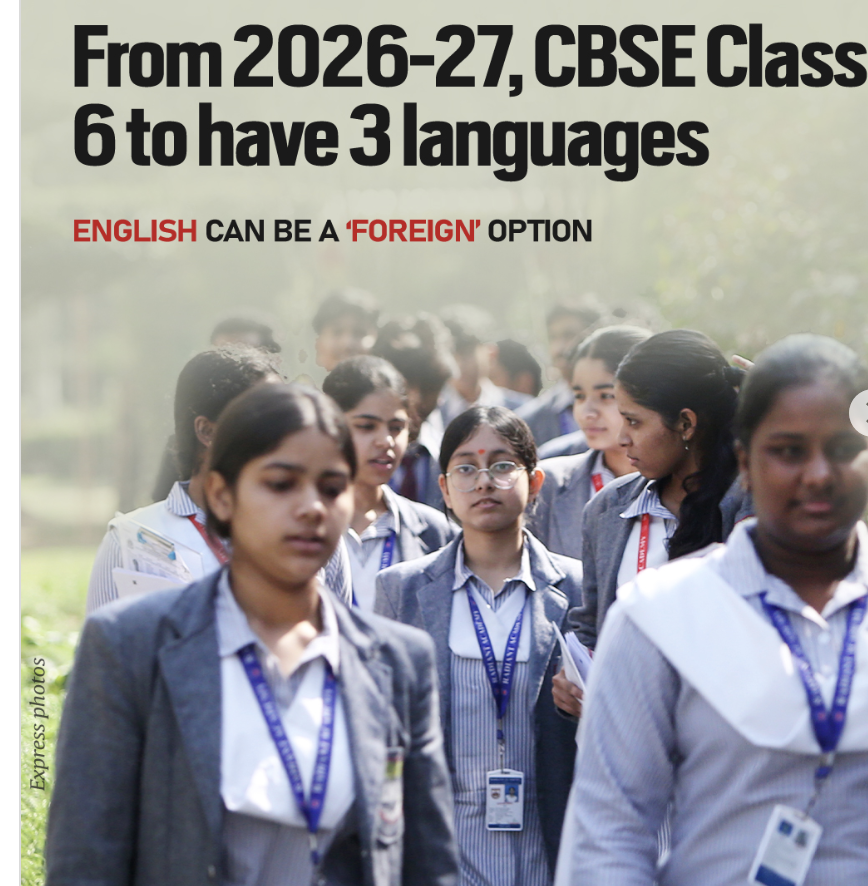
The CBSE board is making a big change in how students learn languages. Starting in the 2026-27 school year, students in Class 6 will have to study three languages instead of two. This follows the new National Education Policy (NEP)
What are the new rules?
The main aim is to promote multilingualism and help students learn different languages from an early age.
- Three Languages: All students from Class 6 to Class 10 must study three languages.
- The "Two-Indian" Rule: Out of these three, at least two must be native Indian languages (like Hindi, Sanskrit, Tamil, or Marathi).
- English & Foreign Languages: English is now grouped with foreign languages. If you choose English, your other two languages must be Indian.
How will it affect exams?
This change will eventually reach the Board Exams. By the year 2031, students in Class 10 will have to take exams for all three languages.
The goal of this change is to
- Promote Culture which help students stay connected to Indian roots.
- Better Brain Power: Learning more languages at a young age is proven to make the brain sharper.
- More Choices: Schools will offer more options like Gujarati,Bengali, Malayalam or Telugu.
Focus on "Notional Learning"
To accommodate the increased workload, CBSE is shifting toward a credit-based system. A full academic year will now consist of approximately 1,200 notional learning hours.
The Board is already in the process of developing fresh textbooks and learning materials for nine Indian languages, including Tamil, Telugu, Malayalam, Kannada, Gujarati, and Bangla, to support schools in this transition.
The New Three-Language Policy is an important step towards strengthening India’s education system. It helps students become multilingual, culturally aware, and globally competitive while staying connected to their roots.