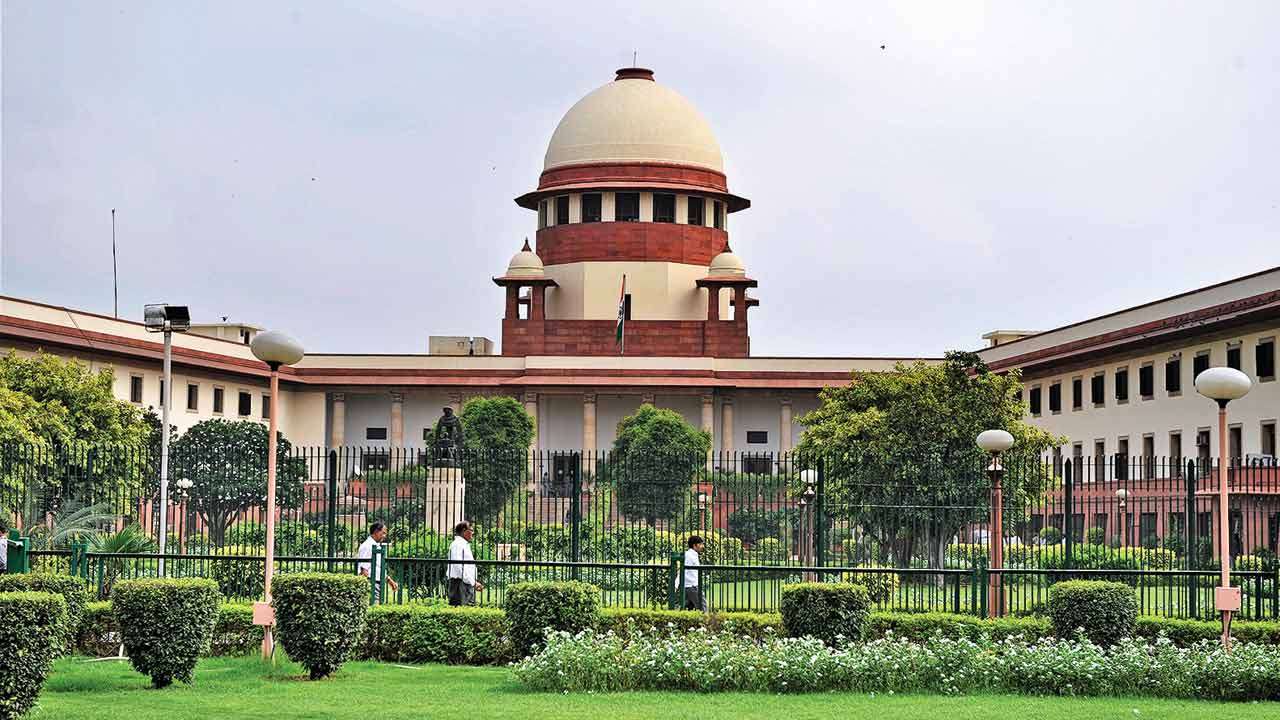
The Central Board of Secondary Education (CBSE) informed the Supreme Court on 17 September 2026 that granting a one-time exemption from its three-language policy to students currently in Class 6 would not be feasible, arguing that such a move could create learning gaps and delay the policy's progressive implementation .
CBSE's Core Arguments
In a detailed note submitted to the bench, CBSE contended that Class 6 was specifically designed as the starting point for the relevant cohort under the National Education Policy 2020 and the National Curriculum Framework for School Education 2023. Exempting the present batch, the Board argued, would mean students entering Classes 7 and 8 without the foundational learning exposure contemplated under the revised framework.
The Board further warned of a "cascading effect," stating that giving relaxation to current Class 6 students would lead to a cycle where every subsequent batch would expect and demand similar relief, resulting in an indefinite delay in implementation.
Implementation Data Presented
CBSE backed its position with data showing that the policy was already being widely adopted. According to its note, only 1.05 per cent of approximately 28,195 CBSE schools have Class 6 students who have opted for more than one non-indigenous language.
The Board also stated that Class 6 textbooks for the third language in all 22 scheduled Indian languages were already available on the NCERT website, covering the choices of 98.36 per cent of schools. For teacher availability, data from 20,777 schools showed that 19,386, or about 93.3 per cent, already had teachers for at least two distinct indigenous languages, with 3,523 schools having teachers for three or more such languages.
Committee Constituted
CBSE informed the court that a five-member committee was constituted on 16 September to facilitate and monitor implementation of the three-language framework in Classes 6 to 10. The committee is headed by Bhagwati Prasad Kalal, Director in the Department of School Education and Literacy, and includes NCERT Secretary Rajeev Kumar, CBSE Director (Academics) Praggya M Singh, KVS Additional Commissioner Chandana Mandal and NVS Deputy Commissioner Somvir Poonia.
The committee has been tasked with reviewing language options offered by schools, assessing the availability of qualified teachers and textbooks, and recommending measures to address implementation bottlenecks.
Supreme Court's Response
Despite CBSE's submissions, the bench comprising Chief Justice Surya Kant and Justices Joymalya Bagchi and V. Mohana pressed the Board to consider a transition for the current Class 6 batch. Justice Bagchi suggested that mandatory implementation for Class 6 could begin from January 2027, while allowing students of the current batch to voluntarily opt for the third language in the interim.
Additional Solicitor General Aishwarya Bhati, appearing for CBSE, agreed to take the suggestion back to the Central Government for reconsideration and said the Board would return with a fresh note on the issue
